



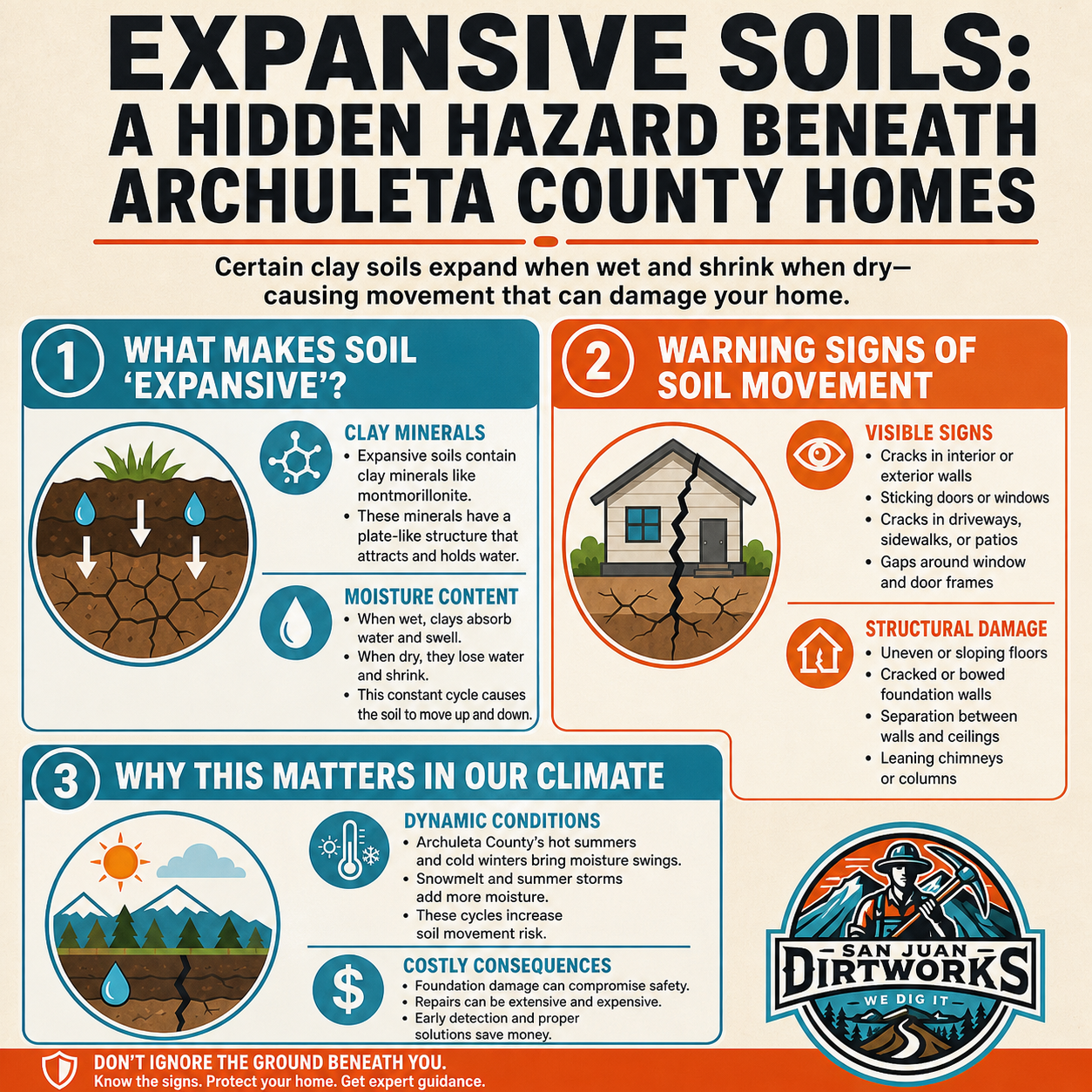
If you own a home in Archuleta County, there may be a risk below the surface that is easy to miss: expansive soils, which swell when wet and shrink when dry. In Colorado, expansive soils and rock are recognized geologic hazards because repeated movement can crack foundations, distort structures, damage slabs, walls, and utilities.
What makes soil expansive
Expansive soils typically contain clay minerals that absorb water and increase in volume, then contract as they dry. The Colorado Geological Survey notes that these materials can generate enough pressure to damage buildings and other structures when moisture conditions change.
In practical terms, this means the ground under a house does not always stay still. Seasonal wetting and drying can create an ongoing cycle of heaving and settlement that stresses foundations over time.
Why this matters in Archuleta County
Archuleta County homes are exposed to the same expansive soil hazards identified across Colorado, and local weather patterns can intensify moisture swings in the ground. Snowmelt, summer storms, and dry periods can all change soil moisture content around a foundation, which increases the likelihood of movement where expansive clay is present.
For homeowners, the result is not always dramatic at first. Damage often starts as small cosmetic symptoms, then grows into more expensive structural problems if the underlaying soil and drainage issues are not addressed.
Warning signs to watch for
Common signs of soil-related movement include:
- Cracks on interior drywall or exterior walls.
- Doors and windows that begin sticking or stop closing squarely.
- Cracks in patios, walkways, driveways, or slabs.
- Gaps around door frames, window frames, or trim.
- Uneven floors, wall separation, or visible foundation distress.
Any one of these issues can have other causes, but patterns of movement across multiple parts of the home is a strong reason to investigate further.
Why early action matters
The longer expansive soil movement continues, the more expensive repairs can become. Identifying the issue early makes it easier to correct drainage problems, reduce moisture swings, and limit additional structural damage before major foundation repairs are needed.
Steps that help protect a home
Several practical measures can reduce risk around a home built on expansive soils:
- Maintain positive drainage so water moves away from the foundation.
- Keep gutters and downspouts working properly and discharging water away from the house.
- Avoid concentrated irrigation or roof runoff next to foundation walls.
- Investigate reoccurring cracks or sticking doors before they become bigger structural problems.
- Seek qualified evaluation when signs of foundation movement appear.
Local takeaway
Expansive soils are a real but often overlooked hazard for homeowners in Archuleta County because moisture changes in clay-rich ground can gradually move a structure out of plane. Understanding the warning signs and managing drainage early are the most effective ways to reduce risk and avoid more costly repairs later.