



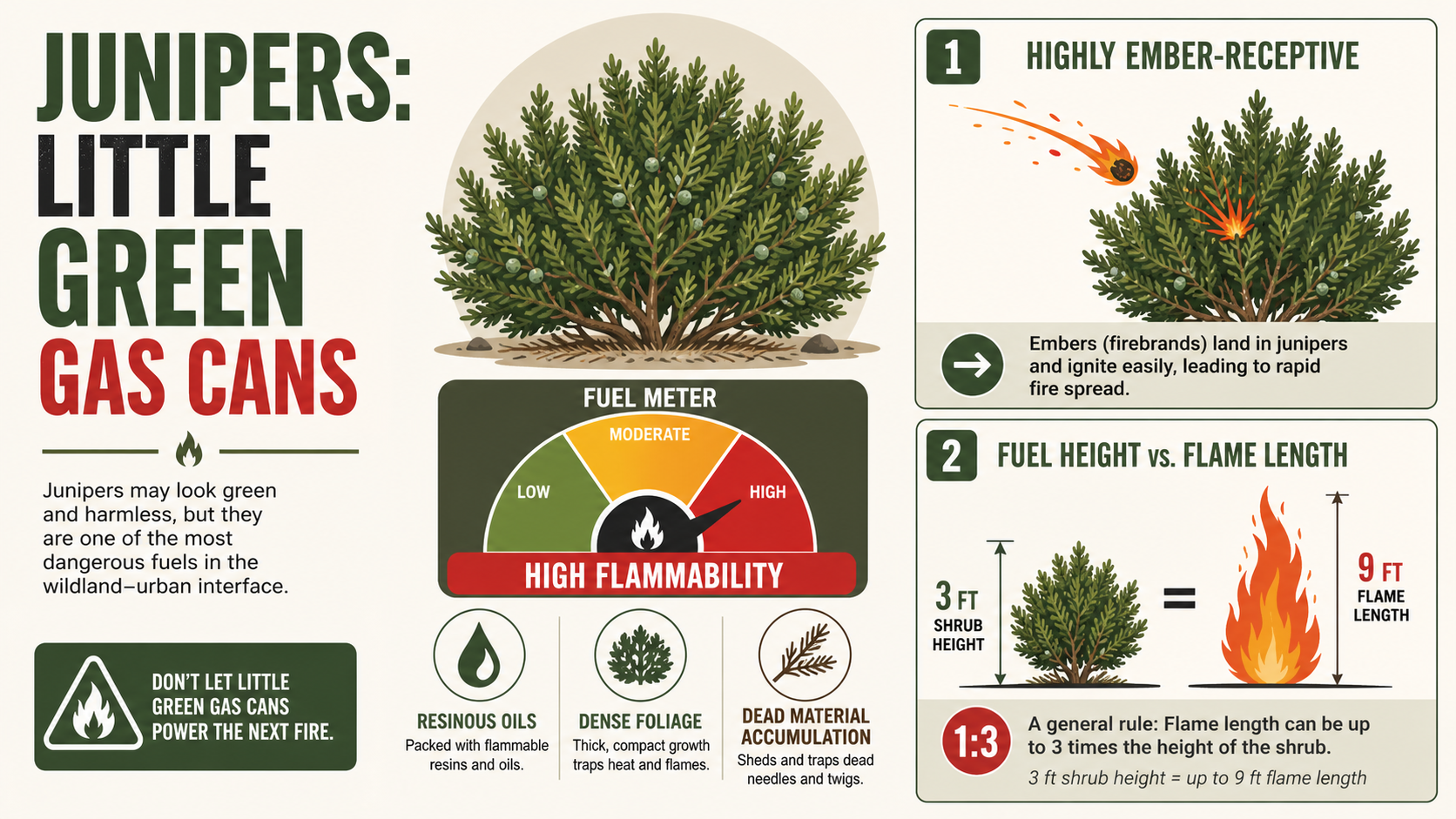
If you live in Southwest Colorado, you’ve probably seen juniper shrubs used in landscaping around homes, cabins, and outbuildings. They’re hardy, drought-tolerant, and low maintenance. But there’s a serious downside that often gets overlooked: juniper is highly flammable, especially when planted close to structures.
As wildfire risk continues to increase across our region, understanding how vegetation choices affect your property is critical.
Why Juniper Is a Fire Hazard
Juniper shrubs contain dense, resinous foliage and often accumulate a significant amount of dead material inside the plant. This combination creates ideal conditions for ignition and rapid fire spread.
When a juniper catches fire, it doesn’t just smolder—it burns hot and fast. Flames can reach several feet high and produce intense radiant heat. If that shrub is located next to your home, deck, or siding, it can easily ignite the structure.
In many wildfire case studies, ornamental shrubs like juniper have been identified as a primary pathway for fire to move from the ground into a building.
The Problem with “Foundation Planting”
A common landscaping approach is to plant shrubs directly along the foundation of a home. While it may look clean and finished, it creates a dangerous situation when flammable species are used.
Juniper planted against a structure can:
- Act as ladder fuel, carrying fire from the ground up to eaves, soffits, and roofs
- Trap heat directly against siding, increasing ignition risk
- Ignite from embers, even if the main fire front is some distance away
In wildfire conditions, embers can travel over a mile ahead of the fire. Dry juniper is especially vulnerable to these spot ignitions.
Defensible Space Recommendations
Fire mitigation professionals and agencies like Colorado State Forest Service recommend maintaining a defensible space zone around structures.
For the immediate area (0–5 feet from your home), best practices include:
- Removing all flammable vegetation, including juniper shrubs
- Using non-combustible materials like gravel, rock, or bare soil
- Keeping the area free of debris, mulch, and leaf litter
Beyond that zone, vegetation should be spaced, thinned, and selected with fire resistance in mind.
What to Use Instead
If you still want landscaping around your home, there are safer alternatives. Low-growing, well-maintained plants with higher moisture content and less resin are generally better choices. Hardscape features like gravel beds, stone borders, and pathways also provide both aesthetic value and fire protection.
The key is reducing continuous fuel and keeping anything combustible away from direct contact with your structure.
How San Juan Dirtworks Can Help
At San Juan Dirtworks, we work with property owners across Southwest Colorado to improve site safety and reduce wildfire risk. This often includes:
- Removing hazardous vegetation like juniper near structures
- Regrading and preparing areas for defensible space zones
- Installing gravel or non-combustible ground cover
- Creating access and clearance for safer property management
We approach every project with both function and long-term safety in mind.
Final Thoughts
Juniper has its place in the landscape—but right next to your home isn’t it. Making a few strategic changes can significantly reduce your wildfire risk and improve the overall safety of your property.
If you’re unsure about your current setup, it’s worth taking a closer look before fire season ramps up.